


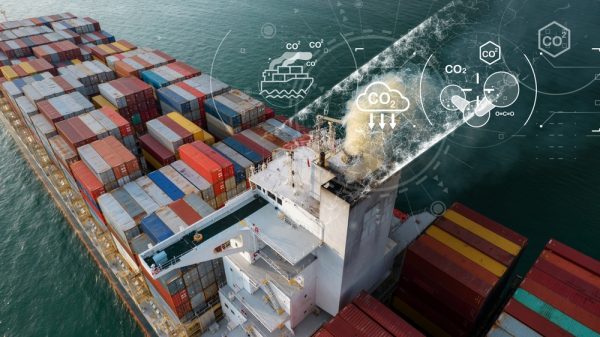
The European Union’s FuelEU Maritime initiative and the Carbon Border Adjustment Mechanism (CBAM) have begun phasing in new environmental compliance costs for global shippers. These carbon regulations aim to internalize the carbon impact of transportation and imported goods, and they’re already showing up as surcharges and cross-border tax line items.
For global shippers, that changes the economics of international trade. Your freight audit is no longer just about validating base rates and accessorials. It must now accommodate complex, dynamic carbon-related adjustments that weren’t even on the ledger two years ago.
New line items are already being passed along
Ocean transportation providers have begun rolling out “green fuel surcharges” tied to FuelEU Maritime compliance, particularly on voyages entering the EU. While these surcharges currently vary, the structure is similar to bunker fuel adjustments: percentage-based, opaque, and fluctuating with regulatory timelines and carbon pricing benchmarks.
The CBAM, on the other hand, adds border taxes on specific carbon-intensive imports such as cement, aluminum, fertilizer, and steel. As of October 2023, reporting requirements are in place, with full financial obligations starting in 2026. This means shippers will soon be responsible for CO₂ emissions declarations tied to the imported goods’ lifecycle emissions.
Implications for contracted freight and landed costs
These changes introduce new volatility into landed cost calculations. Transportation providers are building environmental surcharges into long-term contracts, sometimes with variable-rate clauses tied to EU carbon market prices (EU ETS). Importers can no longer treat freight cost as a fixed assumption; it’s now a function of emissions, regulatory region, and transport mode.
Traditional freight audit models that ignore carbon-based pricing will understate actual landed cost and miss opportunities to dispute or validate emerging charges.
Key impacts include:
- Mismatch between quoted vs. invoiced rates as transportation providers apply evolving environmental fees post-contract
- Skewed profitability assessments if carbon taxes and green fuel surcharges aren’t itemized and rolled into SKU-level cost-of-goods sold (COGS)
- Compliance risks if your audit processes don’t track emissions-related line items for customs reporting or internal ESG disclosures
What must change in your freight audit process
A freight audit built for a pre-carbon-regulation world won’t scale into 2026. Here’s what must be embedded in your audit framework now:
- Carbon surcharge categorization: Classify and track green fuel surcharges, ETS-linked fees, and CBAM-related adjustments in a separate audit category to isolate their impact.
- Dynamic contract modeling: Account for escalator clauses tied to environmental indices during contract audits, not just flat rate errors.
- HS code integration: Pair tariff codes with CBAM applicability to pre-emptively flag exposure during freight audit and customs reconciliation.
- Region-based variance logic: Apply differential audit logic based on whether a shipment enters the EU or another carbon-regulated region.
- CO₂ cost attribution: Map carbon costs to products or SKUs to enable real landed cost visibility across global sourcing strategies.
nVision Global’s freight audit and payment services already support multi-line, rules-based audit logic capable of flagging and managing these emerging cost categories.
Regulatory compliance is a cost management priority
Carbon regulations like FuelEU Maritime and CBAM are not speculative. They’re already in motion. Without changes to your freight audit infrastructure, you risk hidden costs, regulatory penalties, and distorted margin reporting.
Carbon surcharges require supply chain finance to recalibrate. Freight audit is the point where compliance, cost control, and strategic visibility converge.