

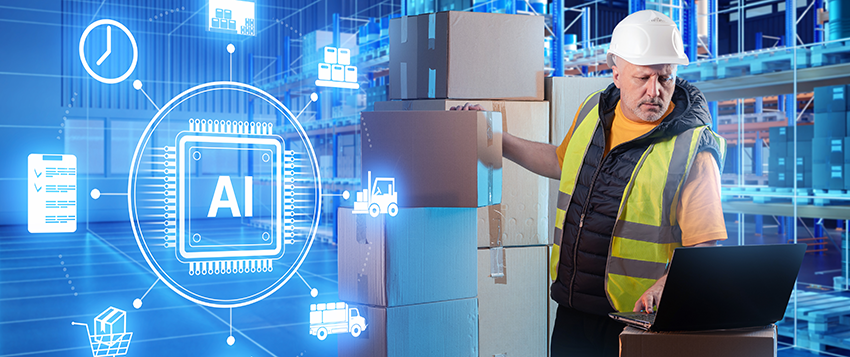
The conversation around AI in transportation management is everywhere. Companies are investing in automation to improve speed, visibility, and decision-making across their supply chains. From shipment planning to invoice processing, AI-driven tools are changing how freight moves.
But while technology can create major advantages, the most successful strategies recognize one important truth:
AI works best when paired with experienced human oversight.
At nVision Global, we believe modern transportation success comes from combining advanced automation with real-world logistics expertise. Because in a complex freight environment, smart systems still need smart people.
Why AI in Transportation Management Is Growing Fast
The demand for AI in transportation management continues to rise because logistics teams face increasing pressure to do more with less.
They must manage:
- Rising transportation costs
- Carrier capacity shifts
- Tight delivery windows
- Global disruptions
- Labor shortages
- Customer service expectations
- Increasing data volume
AI can help companies process information faster, identify patterns, and automate repetitive tasks. That allows teams to focus more energy on strategy and exception management.
This is why many organizations are prioritizing the automation of transportation management systems as part of their broader digital transformation efforts.
Where AI Delivers Real Value
Not every transportation challenge requires AI. But in the right areas, automation can create measurable gains.
Examples include:
-
Data Capture and Document Processing
Invoices, bills of lading, proof-of-delivery records, rate sheets, and shipment updates often arrive in multiple formats. AI-powered tools can capture and structure this data faster and more accurately.
-
Routing and Carrier Selection
AI can evaluate shipment variables such as cost, transit time, service history, and lane performance to support better routing decisions.
-
Spot Quote and Tendering Workflows
In dynamic markets, AI can accelerate quote requests, compare options, and support more responsive carrier procurement.
-
Exception Monitoring
Delays, duplicate charges, missed milestones, and unusual costs can be flagged quickly for review.
These are practical examples of how AI in logistics industry operations can improve efficiency when applied with purpose.
Why Human Oversight Still Matters
Despite its strengths, AI is not a substitute for judgment.
Transportation networks involve changing contracts, customer expectations, weather events, market volatility, claims disputes, and operational nuances that often require context.
That is where human oversight in logistics automation becomes essential.
Experienced professionals help organizations:
- Interpret unusual scenarios
- Resolve service failures
- Manage carrier relationships
- Handle exceptions that fall outside the rules
- Validate recommendations before execution
- Align decisions with broader business priorities
Without human review, automation can move errors faster instead of solving them.
AI Should Support People, Not Replace Them
Many companies make the mistake of treating AI as a replacement strategy. In reality, the strongest model is augmentation.
Technology handles speed, scale, and data processing.
People provide accountability, judgment, negotiation, and strategic thinking.
That balance creates better results than either approach alone.
At nVision Global, our philosophy is simple: use AI where it improves outcomes, and rely on experts where experience matters most.
Choosing a TMS With AI Capabilities
When evaluating a TMS with AI capabilities, companies should look beyond marketing claims and ask practical questions:
- Does the platform solve real operational problems?
- Can users understand and trust the outputs?
- Is automation configurable to business rules?
- Are exceptions easy to manage?
- Is there expert support behind the technology?
- Can it integrate with existing systems and carrier data?
The goal is not to buy AI for its own sake. The goal is to improve transportation performance.
Why Experience Still Matters in Automation
Technology vendors often emphasize software features while underestimating the importance of transportation knowledge.
But successful implementations depend on people who understand rating logic, routing strategies, claims processes, freight audit controls, carrier behavior, and real-world execution.
That is why the future of AI in transportation management belongs to companies that combine advanced systems with proven logistics expertise.
A Smarter Path Forward
AI will continue to transform freight operations. It can streamline workflows, uncover insights, and improve responsiveness across complex transportation networks.
But the winning model is not machines alone.
It is intelligent automation guided by experienced people.
At nVision Global, we help organizations modernize transportation operations through technology, expertise, and a practical approach to innovation.
Because smart automation is powerful, but smart oversight is what makes it valuable.