


UPS Layoffs Reflect Impact of Tariffs and Trade Shifts
The logistics industry was dealt a significant blow this week as UPS announced plans to lay off 20,000 employees and close 73 facilities. This substantial workforce reduction is largely driven by UPS cutting its shipping and delivery volumes for Amazon by 50%, combined with disruptions stemming from the aggressive U.S. tariff policies implemented by former President Donald Trump. These changes reflect broader economic trends, where protectionist policies and evolving trade relationships are reshaping how goods move across borders and affecting the jobs that support them.
Key Drivers Behind UPS Job Cuts
UPS’s decision underscores the profound impact that recent tariffs have had on global trade. According to UPS CEO Carol Tome, the tariffs present the “biggest trade disruption in more than a century,” significantly reducing shipping and delivery demand across several sectors. UPS is particularly vulnerable, given its deep ties to retail giants like Amazon, as well as other China-dependent retailers such as Temu and Shein.
Amazon itself has seen its logistics costs rise due to tariffs, impacting consumer pricing and demand. With approximately 40% of Amazon marketplace sellers based in China, these tariff-driven cost increases directly influence UPS’s shipment volumes and profitability.
The Domino Effect of Tariffs
The ripple effects of tariffs are widespread, affecting supply chains, consumer prices, and global shipping volumes. UPS reports a sharp downturn in deliveries from China-linked bargain e-commerce platforms due to the imminent end of duty-free shipping to the U.S. from companies like Temu and Shein. As these companies adjust by incorporating tariffs into their pricing, consumer demand inevitably softens, leading to reduced shipping volumes.
This challenge isn’t isolated to China-US trade alone. While UPS sees increased activity from alternate sourcing hubs like Vietnam and Thailand, completely offsetting the volume from China, a global manufacturing powerhouse, is a long-term endeavor that cannot swiftly mitigate current disruptions.
Implications for the Logistics Industry
The UPS layoffs serve as an urgent reminder of the vulnerabilities within global supply chains. For logistics managers and business leaders, the need to proactively address tariff implications, diversify sourcing, and increase supply chain visibility has never been clearer.
Strategic freight management solutions, including robust Freight Audit & Payment systems and adaptive Transportation Management Systems (TMS), are essential tools for navigating this complexity.
Companies equipped with clear, accurate logistics data can better forecast tariff impacts, manage inventory effectively, and adjust procurement strategies dynamically to safeguard their operations.
How long do the UPS layoffs last?
The UPS layoffs are expected to be completed by the end of June 2025. The company announced plans to cut 20,000 jobs and close 73 facilities, primarily due to a strategic reduction in its business with Amazon and broader economic uncertainty. These changes are projected to save the company $3.5 billion in 2025.
Where are the UPS layoffs happening?
UPS layoffs are happening across the U.S., including facility closures and shift cuts in California, Ohio, Pennsylvania, Oregon, and Colorado, as part of a broader restructuring plan. These closures are part of UPS’s broader strategy to modernize its operations, including implementing automation and artificial intelligence technologies.
Preparing for an Uncertain Future
The reduction in UPS’s workforce highlights the urgency of adopting flexible logistics strategies that mitigate risks associated with tariff-induced trade disruptions. Companies can protect themselves by
- Diversifying supply chains beyond tariff-heavy regions.
- Leveraging data analytics for real-time visibility into freight costs and shipment flows.
- Implementing technology-driven logistics solutions, such as dynamic pricing tools and freight management software.
As global trade dynamics evolve, having agile, data-informed logistics practices will determine which businesses successfully navigate these turbulent times and which face more challenging outcomes.
For more insights on managing supply chain disruptions and enhancing logistics resilience, contact nVision Global today.

The Importance of nVision Global Achieving ISO/IEC 27001:2022 Certification: A Commitment to Information Security
In today’s data-driven business landscape, where cyber threats are becoming increasingly sophisticated, the need for robust information security management systems (ISMS) has never been more critical. nVision Global’s recent achievement of ISO/IEC 27001:2022 certificationmarks a significant milestone in its commitment to safeguarding customer data and reinforcing trust in its freight audit and payment solutions.
What is ISO/IEC 27001:2022 Certification?
ISO/IEC 27001:2022 is the international standard for managing information security. It provides a framework for establishing, implementing, maintaining, and continually improving an ISMS. This certification is a globally recognized benchmark for organizations that prioritize protecting their sensitive data, ensuring business continuity, and managing information security risks effectively.
Why This Certification Matters for nVision Global
For a company like nVision Global, which handles vast volumes of sensitive supply chain data, achieving this certification underscores its dedication to maintaining the highest standards of information security. Here’s why this is significant:
- Enhanced Data Protection: nVision Global ensures that customer data is stored, processed, and transferred with the utmost security, reducing the risk of breaches and unauthorized access.
- Alignment with Industry Standards: The certification aligns nVision Global with global best practices, ensuring its information security measures remain relevant and robust in a rapidly evolving digital environment.
- Proactive Risk Management: By adhering to ISO/IEC 27001:2022, nVision Global demonstrates its ability to identify, evaluate, and mitigate information security risks effectively.
- Customer Confidence: Certification reassures customers that nVision Global prioritizes protecting their data, enabling them to focus on their core operations without concerns about information security.
Why Should Customers Value Suppliers with ISO/IEC 27001:2022 Certification?
When choosing suppliers, customers must consider more than just the price and quality of services. In an era where data breaches can have catastrophic financial and reputational repercussions, working with ISO/IEC 27001:2022-certified suppliers offers multiple advantages:
- Guaranteed Security Compliance: Suppliers with this certification are audited by third-party bodies to verify compliance with rigorous security standards. This ensures customers benefit from robust data protection measures.
- Mitigation of Supply Chain Risks: Supply chain vulnerabilities are a prime target for cyberattacks. Partnering with certified suppliers ensures an additional layer of security within the supply chain.
- Regulatory Alignment: Certified suppliers are better equipped to comply with regulations such as GDPR, CCPA, and others, reducing the likelihood of legal penalties or non-compliance issues for customers.
- Trust and Reliability: Certification is a testament to a supplier’s reliability and commitment to continuous improvement, instilling confidence in their ability to protect sensitive data.
nVision Global’s Dedication to Excellence
Achieving ISO/IEC 27001:2022 certification is not just a badge of honor for nVision Global; it is a reflection of its dedication to operational excellence, customer satisfaction, and data security. This milestone reinforces its position as a trusted partner for global freight audit and payment solutions, where information security is non-negotiable.
Conclusion: Why This Certification Should Matter to You
In today’s interconnected business environment, data security is not optional—it’s a critical component of doing business. nVision Global’s ISO/IEC 27001:2022 certification is a powerful statement of its commitment to protecting customer data and minimizing risk. Customers who choose suppliers with this certification can rest assured they are partnering with organizations that take security as seriously as they do.
By placing value on certifications like ISO/IEC 27001:2022, businesses not only protect their data but also foster a culture of accountability, trust, and resilience in their operations. Partner with nVision Global and experience the confidence that comes from working with a certified, security-first organization.

Navigating the Storm: How the Red Sea Crisis Is Reshaping Global Logistics?
In the wake of recent geopolitical tensions, the logistics and transportation sectors are facing a new challenge that could ripple through the global economy for months to come. As of late January 2024, the oil market is on high alert, bracing for a weeks-long disruption in the southern Red Sea, a critical artery for global seaborne trade.
The southern Red Sea has become a hotspot for uncertainty due to continuous attacks by Houthi militants on merchant vessels, a situation exacerbated by the ongoing conflict in Gaza. This has led to a significant shift in the operational strategies of shipping companies, with many opting to reroute their vessels to avoid the potential dangers in the area.
Red Sea Crisis: Impact on Shipping Strategies
In anticipation of disruptions, shipping companies are now chartering tankers for alternative routes, a change affecting the logistics of crude oil and fuel transportation significantly. Notably, routes typically seeing tankers heading toward Europe are being redirected toward Asia, bypassing the southern Red Sea’s volatility.
This shift is not without cost implications. The detour around Africa, for instance, represents a substantial increase in distance and, by extension, shipping costs. However, the safety of the crew and cargo and the avoidance of potential delays are paramount, driving the decision-making process for many shipping companies.
Financial Implications and Market Adaptations
The redirection of shipping routes has led to a surge in earnings for tanker owners. Reports indicate that earnings for relatively large tankers shipping oil products have doubled from $35,000 to $60,000 a day within a week. This spike reflects the increased demand for tankers capable of undertaking longer voyages as well as the immediate cost impact of rerouting ships.
Moreover, the logistics sector is witnessing innovative strategies to mitigate these increased costs. For example, there has been a notable trend of smaller cargo loads being combined onto larger vessels, optimizing the cost-efficiency of these longer journeys.
Navigating Future Challenges
For logistics providers like nVision Global, which specializes in Transportation Management Systems (TMS), Freight Bill Audit & Payment, and Freight Claims solutions, the current situation in the Red Sea presents both challenges and opportunities. The ability to swiftly adapt to changing geopolitical landscapes and reroute logistics operations is crucial.
nVision Global’s TMS solutions, for instance, can play a pivotal role in enabling companies to efficiently manage these unexpected shifts, ensuring that despite the turmoil, goods continue to move efficiently and cost-effectively around the globe.
Furthermore, nVision Global’s freight bill audit and payment services become increasingly important in such scenarios. With shipping costs fluctuating and routes being adjusted, having a robust system in place to monitor, audit, and manage freight bills ensures that companies can maintain financial control and visibility over their logistics operations.
Conclusion
The situation in the southern Red Sea is a stark reminder of the vulnerabilities inherent in global logistics networks. However, it also highlights the resilience and adaptability of the logistics and transportation sectors. By leveraging technology, such as TMS, and employing strategic thinking, companies can navigate these turbulent waters, ensuring that the flow of goods remains uninterrupted even in the face of geopolitical challenges.
nVision Global stands at the forefront of this adaptive response, offering solutions that not only mitigate the immediate impacts of such disruptions but also provide long-term resilience and efficiency improvements for global logistics operations.

Navigating New Tides: Understanding the Impact of Houthi Rebel Attacks on Global Shipping
The global shipping industry, the backbone of international trade, is navigating through turbulent times. Recent Houthi rebel attacks on commercial vessels in the Red Sea have heightened concerns and reshaped maritime logistics dynamics. Here we will explore these developments and their broader implications on the shipping world, focusing on how nVision Global’s solutions can help address these new challenges.
Escalating Tensions in the Red Sea
Recent incidents, including attacks on a U.S.-owned ship off the coast of Yemen and missile strikes in the Red Sea, underscore growing risks in one of the world’s busiest maritime routes. These events, part of a larger geopolitical conflict, have the potential to disrupt global trade significantly. As a critical waterway for oil and container shipping, the Red Sea’s security is paramount. The recent turmoil has prompted shipping companies to reevaluate routes and strategies, with significant implications for global logistics.
The Ripple Effect on Global Shipping
These attacks lead to increased travel distances, fuel costs, and shipping times, affecting global supply chains. nVision Global’s advanced Transportation Management System (TMS) can help mitigate these challenges by optimizing routes and managing costs effectively.
Adaptive Strategies by Shipping Companies
In response to the increased risk, some ships have declared themselves ‘all Chinese’ to avoid targeting. nVision Global supports such adaptive strategies with its comprehensive Freight Audit & Payment, and Freight Claims Services, ensuring the safety and efficiency of maritime operations.
nVision Global’s Role in Navigating the Crisis
As the situation evolves, nVision Global stands ready to assist with real-time monitoring systems, risk assessment, and alternative logistical plans. Our expertise in end-to-end logistics solutions positions us to help businesses adapt to these new challenges, ensuring continuity and resilience in their shipping operations.
The Growing Risks in a Vital Maritime Artery
The recent attacks on a U.S.-owned ship off the coast of Yemen and missile strikes in the Red Sea underscore the growing risks in this vital maritime route. These incidents, reflective of the broader geopolitical conflict in the region, threaten significant disruptions in global trade. nVision Global’s comprehensive logistics solutions are designed to address these challenges, offering strategic support to businesses navigating these uncertain waters.
How nVision Global Can Help
Risk Assessment and Management:
nVision Global’s advanced analytics can help businesses assess and manage the risks associated with shipping in high-tension areas. By analyzing patterns and incidents in the region, nVision Global can provide timely advisories and recommendations to avoid high-risk zones.
Route Optimization:
Utilizing nVision Global’s Transportation Management System (TMS), companies can reroute shipments efficiently to avoid troubled areas. This system helps in identifying alternative routes that minimize risks and costs while ensuring timely deliveries.
Real-time Monitoring and Communication:
With the unpredictability of attacks, real-time monitoring of shipments becomes crucial. nVision Global’s tracking systems offer up-to-the-minute information on vessel locations and statuses, allowing for quick response to any incidents or rerouting needs.
Cost Control and Freight Audit Services:
The increased costs associated with longer routes and higher insurance premiums can be a significant concern. nVision Global’s Freight Audit & Payment services help businesses manage these additional costs effectively, ensuring transparency and cost-efficiency in logistics operations.
Legal and Claims Support:
In the event of an incident, having robust freight claims services is vital. nVision Global can assist in navigating the complexities of maritime claims, providing legal support, and ensuring that businesses are adequately compensated for any losses or damages.
Conclusion
The Houthi rebel attacks in the Red Sea represent a significant challenge for the global shipping industry, underscoring the need for strategic planning and international cooperation. nVision Global’s innovative solutions provide vital support in navigating these complexities. Our commitment to adapting and optimizing logistics strategies in response to geopolitical changes helps ensure the safety of maritime routes and the continuity of global trade. In these challenging times, nVision Global is your partner in maintaining a resilient and efficient supply chain.

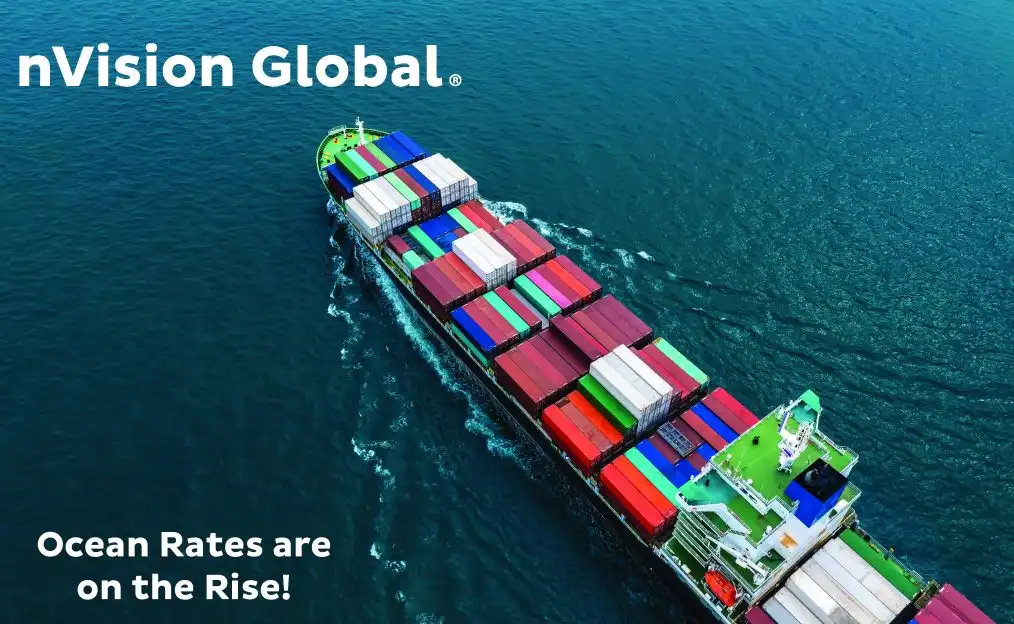
Navigating Troubled Waters: Major Ocean Rate Hikes
Navigating Troubled Waters: The Impact of Houthi Rebel Attacks on Global Shipping
Introduction
The global shipping industry, a crucial artery of international trade, is currently facing a significant upheaval. In recent times, the Houthi rebels’ escalating attacks on commercial shipping vessels in the Red Sea have sparked widespread concern. This development has forced many container carriers to reroute their ships around the Cape of Good Hope in South Africa, avoiding the shorter and more traditional passage through the Suez Canal. This blog post delves into the implications of this strategic shift, particularly focusing on the rising costs of ocean shipments and the broader impact on global trade.
The Strategic Importance of the Red Sea and Suez Canal
Traditionally, the Suez Canal has been a linchpin in global shipping, offering the shortest sea route between Europe and the lands lying around the Indian Ocean and western Pacific. However, the increasing threat posed by the Houthi rebels in the Red Sea region has cast a shadow over this critical maritime corridor.
The Rising Threat from Houthi Rebels
The Houthi rebels, based in Yemen, have intensified their maritime attacks, posing a significant risk to commercial vessels transiting the Red Sea. These incidents range from direct attacks to threats of attacks, creating a climate of insecurity and uncertainty for shipping companies.
The Impact on Shipping Routes
As a direct consequence of these heightened risks, many shipping companies have opted to reroute their vessels around the southern tip of Africa – the Cape of Good Hope. This decision, while enhancing safety, comes with its own set of challenges and costs.
Increased Costs and Transit Times
The detour significantly increases the journey length, leading to higher fuel consumption and extended transit times. The longer voyage not only translates to increased operational costs for shipping companies but also affects the timely delivery of goods. Consequently, these additional costs are often passed down the supply chain, affecting manufacturers, retailers, and ultimately consumers.
Broader Implications for Global Trade
The rerouting of ships around the Cape of Good Hope has broader implications for global trade. It affects shipping schedules, leads to congestion in alternative routes, and can disrupt the delicate balance of supply and demand in global markets.
Adapting to the New Normal
In response to these challenges, shipping companies are adopting various strategies. These include increasing freight rates, investing in more fuel-efficient vessels, and exploring alternative routes. Additionally, there’s a growing emphasis on maritime security and intelligence to mitigate risks.
Conclusion
The situation in the Red Sea, exacerbated by the actions of the Houthi rebels, underscores the fragile nature of global trade routes. It highlights the need for international cooperation in ensuring maritime safety and security. As the world adapts to this new normal, the resilience and adaptability of the global shipping industry are being tested like never before.




AI Solutions for TMS
NETWORK OPTIMIZATION
Transportation Management Providers Look to AI Solutions
AFTER WEATHERING THE storm of the pandemic and container crises, supply chain businesses are again looking to the future. What’s the best way to manage international networks, freight transport and the cost of doing business? One area getting more and more attention is the application of artificial intelligence (AI). Over the past few years, AI has moved from being an abstract idea to a technology with numerous real-world applications.
Although most of the recent AI news has been focused on groundbreaking software such as ChatGPT, there is a quiet AI revolution happening across supply chain management systems. One of the visionaries in this space is nVision Global, a leading software vendor for transportation and freight management.
nVision’s Senior Vice President of Supply Chain Services, Stewart Dunsmore, is focusing on optimizing transportation networks for logistics providers, the value of a best-in-class team and best practices in managing cultural resistance when introducing AI solutions.
This starts with how customer requirements, and the systems that support those needs, are evolving. nVision is building AI solutions that look beyond simple transportation management systems. Instead, they are developing software around the central concept of global freight management — applications that can bring together transportation, cost management, freight audit, business intelligence, claims and other key areas. These tools change the way supply chain businesses control their transportation networks. Instead of a one-way focus based purely on moving freight from A to B, integrated software can balance cargo management, orders, inventory, forecasting and business intelligence. Optimization is key to all these areas.
Freight and logistics providers are moving on from the shocks introduced by the pandemic, container availability, pricing and inflationary pressures. They want to know what to focus on next to drive growth and improve stability.
Dunsmore says that the key sectors where he’s seeing greater customer needs are across regional and global cost management, freight consolidation and shipment visibility — all areas where AI can help.
“Customers want to optimize their global supply chain across all cargo types, and they’re looking for software and AI to help them optimize. They want to reduce the administrative overhead of their activities and find tools that can help them be dynamic,” he said.
This need for an agile and dynamic response to rapid changes isn’t surprising. One of the core lessons to come out of COVID-19 and its downstream impacts is the need to react quickly, get early insight into risks and issues, and have contingencies in place. Pricing is a particular concern. The length of fixed-price transportation contracts doesn’t always align with rapidly changing costs and charges. How can freight providers,
carriers and customers use AI to give them an advantage in a volatile pricing environment?
nVision says that with increasing demand pushing up rates, the answer is greater visibility of costs across cargo types. Dunsmore sees this with nVision’s customers.
“They have had to deal with adapting to dynamic rates moving on a regular basis across a good amount of cargo types — particularly in the sea freight side. They want to analyze their freight span and costs across all cargo types. They’re looking for AI to help them optimize pricing,” he said.
Data and business intelligence are starting points for understanding pricing, but it’s AI that does much of the heavy lifting. As costs change, shippers and carriers must adapt their pricing strategies — they need tools that can match those needs. Spot auction tools and automated bidding are taking center stage, giving closer visibility and control over rapidly changing rates, especially for LTL and specialty trucking. “
Our global auction tool manages pricing and currencies across the regions of our customers. That’s important because global contracted rates are still moving on a rapid basis. Before the pandemic, they would have contracts that would be locked in for 18 months on, for example, air and ocean,” Dunsmore said.
Strong cost control and network optimization feed into several other critical areas for supply chain businesses: Cash-to-cash cycle times; revenue interruption; increasing interest rates; and financial management across countries, currencies and regions.
The principle of managing rates across multiple currencies and regions is vital. Increasing globalization and consolidation means that more businesses are operating across large, international supply chain networks.
Buyers and sellers must balance country-level pricing and transport with overall corporate requirements for cost control and budgeting.
UK companies working in British pounds need to effortlessly report their expenditures to a US parent company in dollars. The US parent company needs to provide its British business with autonomy while ensuring strong budgetary controls.
nVision solutions use machine learning and intelligent systems to lower transportation costs, provide detailed visibility into rates and allow for regional and corporate financial control.
Business intelligence and visibility make it easy to see the value that AI
provides. Data collection, and insights into that data, are starting points for better forecasting and predictability. nVision uses broad, deep information from across its operations to suggest ways clients can optimize further. Dunsmore believes that one of the strengths of global freight management is being able to understand data across various operations and regions.
“Our diversified customer base gives us access to freight data across all cargo types and global lanes. AI can use that diversified data to provide greater predictability. The interpretation of that AI output is key, and it’s a great avenue for customer conversations,” he said.
This highlights a key point — AI isn’t just about data, algorithms and predictive analytics. The interpretation of these areas is what drives true value. This boils down to business analysts and data scientists seeing broad trends identified by AI, together with deep insight into a specific customer’s freight operations.
It’s that combination of software-driven insights with analyst expertise that helps carriers, shippers and others get the most out of AI. A team with myriad viewpoints and experiences helps to add nuance and context to customer conversations.
Dunsmore emphasized the importance of nVision’s analysts and their variety of strengths and expertise. This ranges from experience in specific transportation functions such as inventory or pricing, across knowledge of cargo types, through to understanding cultural touchpoints, country-specific norms and regional variations.
This creates a mutually beneficial relationship between analysts, AI tools and freight management customers. Analysts can feed their findings and concepts into the tool and the AI layer can learn from, analyze and validate those ideas. This provides conversational starting points with customers, focused on their actual data and contextualized with the business analyst’s experiences.
From a customer perspective, the ability to visualize and act on both operational data and analyst recommendations is crucial. This speaks to a larger point, that of configuration — freight managers are busy, data is complex, and AI can be a black box. Easy configuration is extremely important for nVision’s customers.
“Our software was built on its ability to adapt. We’re going to configure our software and demonstrate its value when it’s applied to our customer’s business processes and challenges,” Dunsmore said.
Alignment with customer business priorities is key. nVision holds strategic business reviews with customers on a quarterly basis, ensuring that their requirements feed back into software development, implementation and configuration. They support this approach with workshops, where the company and its customers can collaborate on regional business processes and configure the tool to support those needs.
Although AI has many upsides, it’s not all smooth sailing — as expected, there can be significant pushback on bringing AI tools into a business. While it can bring down operational costs and highlight future opportunities, AI can also be a threat to employees if their work is outsourced to an algorithm. Although it’s still too early to say what impact AI will have on the labor market, companies must be mindful of individual and cultural sensitivities when introducing these tools. Protectionism around AI can be a major challenge. Leaders, managers and employees could resist the introduction of new tools due to job concerns. Certain countries, facing their own economic uncertainties, are very resistant to change. Some are still on the fence, while others are ready to embrace the technology and the benefits it can provide. nVision sees a lot of different levels of pushback. Dunsmore believes in a sensitive, phased approach to introducing these tools, requiring strategies to minimize disruption. “You have to introduce software gradually. That means little projects that prove the value of these tools and easing people into the changes,” he said.
This also includes not going over people’s heads. “We’re not going to go straight to the CFO or COO and say that people are resisting opportunities. We’d much rather work directly with people who are resistant to these changes to understand and address their concerns. That leads to much better business relationships.”
A measured, sensible, small-scale implementation can provide considerable benefits to nVision and its customers. They have found that working closely with concerned employees helps to remove their fears and build confidence in the value of the tools. This helps turn resistant stakeholders into advocates, who then highlight the benefits of AI to their peers and managers. Limiting the original scope of AI can drive more positive experiences and build greater trust and use of the tools over the long term.
AI tools can revolutionize how freight managers do business. The opportunities are significant and touch on a multitude of areas including cost management, transportation networks, freight audit, claims, visibility and business intelligence. The combination of a diligent approach, innovative software and expert teams will help supply chain businesses optimize for the future.
Journal of Commerce, June 5, 2023, written by Paul Maplesden

The Value of Measurement in Logistics
Logistics originated in the military, where the ability to fight a battle was predicated on feeding and arming an army away from its home base. The result of a great logistics capability was an army ready and able to do battle. The alternative was a starving, ill-prepared army who could well be slaughtered. As Omar Bradly, one of the leading American military commanders in WW II stated, “Amateurs study strategy, professionals study logistics.” But professional logistics means managing a capability not just hoping it will deliver the goods!
Today the consequence of perfor- mance is the survival of a company, as only those that can satisfy their custom- ers with the right goods at the right time and the right place (product, place and time utilities of logistics) are going to be profitable and survive. The question is how does a company ensure the delivered goods provide this utility consistently?
Lord Kelvin, the physicist who developed the Kelvin International scale of absolute temperature in the late 1800’s, said “If you cannot measure it, you cannot improve it”. This is true today, as logistics requires that we continuously improve, or our competitors will erode our current competitive advantage and the company will struggle to survive.
All this leads to the need to measure the logistics provided to the customer. Logistics is the link between the customer and the source of the goods and, if done better than anyone else, is a source of competitive advantage. Without measurement, we have no knowledge of whether our service standard is being met, falling below the standard and losing customers or so far above the standard we are losing money on the service. Measurements of logistics performance allow the company to ensure the most economically advantageous level of service is chosen and maintained. The measurement of logistics performance is not as simple as it sounds. No one delivers everything on time without exception. The question is really what is accepted as the standard we expect for the majority of the deliveries, and what is the deviation allowed from this standard? The correct way is to use both the average of the defined compliance to this standard, and the deviation (usually the standard deviation for those of you who enjoy statistics) from this average. With these measures we can determine if the average is maintained or changing, and the deviation will show the extent of the variation. The company can use these two measures to maintain the delivery standard and perhaps improve it if economically valuable. While these are the two fundamental measurements for logistics, other measures must be part of the ability to measure and manage. Foremost in these is the order fulfillment accuracy and then the measure of any returns and the cause of the return.
Companies often suffer with limited usable data from the financial systems that the company utilizes. Logistics is a process that moves across many entities and many accounting codes. The capability to extract this information and use it timeously is not that common. Where then does a company turn for valid information? One of the most valuable sources of information is the billing invoice from the logistics service provider, which will include the order and its date, the source of the goods (warehouse or source of manufacture), the goods, the company that delivered them and to where, and the date of delivery. If the data can be extracted simply from the financial systems, this must be used. But for the majority of companies performing logistics, the simplest source for this data is the audit and pay (freight audit) function performed by third party companies. While the aim is to extract data to verify the goods were delivered and to pay the service provider, the same data can be used to measure and manage logistics processes.
Let’s look at an example for the use of this information. A company ware- housed and delivered consumer electronic goods to brick and mortar stores for one of the leading brands. It was a complete surprise to the brand owners that deliveries went up by 30% before sales promotions, and return volumes were up by nearly the same amount. As returns become discounted goods the brand was losing money in the value of the stock, and also paying to deliver and return the goods. The logistics service providers became aware of these peaks but realized something was not sensible. Data analysis showed the impact for extra deliveries and, with a little bit of financial data, the impact on the brand managers accounts. Rather than raise a complaint, the logistics providers provided data to show the financial impacts and the brand managers listened. It turned out the stores were significantly over ordering, so they had stock to secure the sales during the promotion. The brand managers changed the returns policy to preclude this behavior and saved significant costs. Data, not opinions, helped to define this and enabled the brand to manage the consequences with the stores.
With this understanding of the value of logistics measures we can delve into where data can be extracted and how to use it.
Save 3-5% On Your Freight Costs
Routing Guide Utilization Can Save You 3-5% On Your Freight Costs?
Company Overview
nVision Global is the leader in global freight management solutions and services, special- izing in Freight Audit & Payment, Order Man- agement, Supplier Management, Visibility, TMS and Freight Spend Analytics.
Quick Facts
- ISO 9001 Certified Operations Center
- We Manage Billions in Freight Spend Annually
- Certified FedEx Freight Bill Audit & Payment Provider
- Associates are Located in 7 Corporate Facilities Across 3 Continents and 12 Countries
Services & Solutions
No Customer has Spent More Money on our Services & Solutions than they have Saved!
Freight Audit & Payment
Enables companies to save 7-15% on freight invoice charges, easily collaborate with carriers to resolve invoice issues and have access to the data that drives future savings.
Impact TMS
Our Global Freight Management Solutions allow you to plan, organize and manage all of your global shipments in one, easy to use, global solution.
Freight Claims
Our solutions ensure your shipments are protected from loss & damage, service failure and overcharges. With an 87% collection rate, resulting in more than $7,000,000 in recovered charges, you can trust nVision Global.
ASK YOURSELF…
Are your employees utilizing the optimal transportation provider for every shipment?
Are you losing money and customers because your transportation providers are not performing at acceptable levels?
How do you measure your transportation provider performance?
If Any of These Questions Peaked Your Interest, You Owe It to Yourself to Take a Look at nVision Global’s Freight Management Solution IMPACT TMS.
IMPACT TMS ensures shippers utilize the optimal transportation provider for every shipment by comparing rates, transit times, equipment, service levels and other attributes among all of the potential transportation providers IMPACT TMS then provides recommendations on the best transportation provider to use based on a company’s specific requirements.
Additionally, IMPACT TMS also provides real-time visibility into transportation provider performance, including on-time delivery rates and other metrics. This enables companies to track transportation provider performance and make informed decisions about provider selection based on historical data.
Another way that IMPACT TMS can guarantee the use of the optimal transportation provider is by enabling companies to negotiate better rates with providers. By generating detailed shipment data and historical performance metrics, IMPACT TMS helps companies negotiate more favorable rates with transportation providers based on their shipping volumes and specific requirements.